Sunday, 3 May 2020

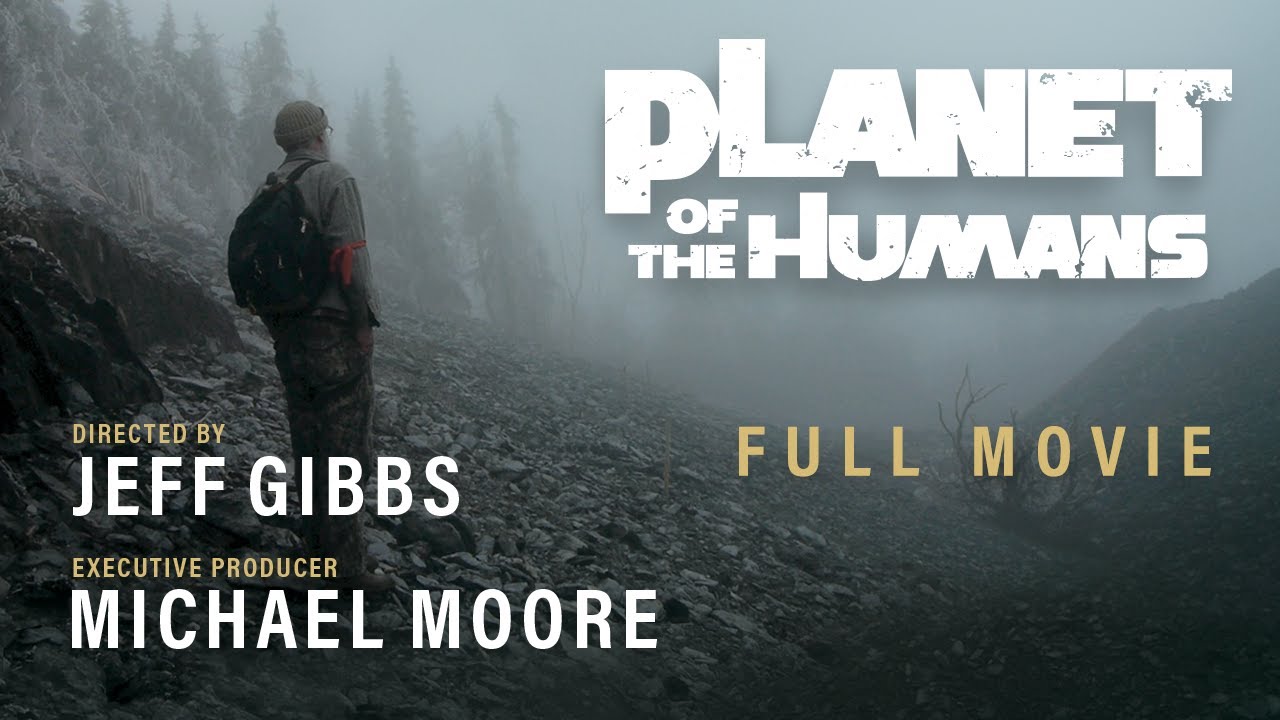
Review of Planet of the Humans: What They Get Right and the Environmentalists Get Wrong


Written by Paul Fenn and first published at Local Power

Planet of the Humans has stirred the resentment of many a climate crusader. Yesterday, the chair of the Sierra Club California Energy and Climate Committee instructed committee members (I am one) not to “watch or promote” Planet of the Humans. Today, climate scientists called for the film’s suppression. Enticed by such parental warnings, like an aroused teenager, I just had to watch it.

The film, produced by left-wing film idol Michael Moore, appears to expose and debunk current environmental initiatives for “100% renewable cities” in the United States. Sierra Club activists view the film as undermining climate action on Earth Day. But as the creator of Community Choice Aggregation, which accounts for 67 of 71 U.S. cities that have actually achieved 100% renewable electricity as of 2020, I feel compelled to speak up.

There is some truth to this film, hidden behind a multitude of glaring falsehoods. It is important to explore what the film gets right. As climate activists in the era of climate disruption, we must be clear about what our carbon reduction polices are actually going to achieve, as we push local communities around the world to implement Green New Deal programs, Paris Agreement targets, climate mobilizations, and renewable energy initiatives.

Let us not get caught up, after all, in lies created not by environmentalists, but by utilities and governments that have propagated them. They are not our lies, and therefore we need not keep them, but renounce them when clearer, bolder, more concerted actions are required to meet the United Nations ten year horizon for “worldwide energy transformation to avert irreversible ecological damage to the planet.”

The main message of Planet of the Humans is that renewable energy and electric vehicles and other technologies cannot stop climate change, but merely introduce new forms of pollution and environmental destruction. The film’s sense of hopelessness is mesmerizing.

Reviewing the progress of renewable energy in recent years, film director Jeff Gibbs sniffs out contradictions and presents them in a kind of cascading epiphany of juvenile disillusionment. Wind farms' intermittency requires massive natural gas power plants. Solar farms destroy the desert. Lithium ion batteries involve new forms of sea-bed mining for rare earth metals. Each solution to climate change creates a new problem, to the extent that it merely repowers the same economy, and the same civil society. Conclusion: humanity is destructive.

Yet, between these layers of accusation lie some very, very important and salient truths.  Planet of the Humans presents harsh realities about our world, mixing up cause and effect, technology and policy. We must unpack these conflations.

In doing so, we find dominant neoliberal currents, often unconscious, at the heart of the environmental movement that profoundly undermine its impactfulness. By continuing to gloss them over in the era of Trump, mainstream environmental organizations are in fact sowing the seeds of counterrevolution.

I know this, because I come up against it every day in the very green energy movements I have started, led and in some cases lost to neoliberals who don’t even know they were neoliberals, whose approach to greenhouse gas reduction is to promote the technological fixes and market solutions that are the idols of capitalism, presenting the illusion that solving climate crisis is as simple as a new line of products to consume.

Gibbs and Moore’s critiques are real, but they oversimplify the problem they describe as an existential crisis with no exit. This delivers them into the pessimistic catch-basin of "overpopulation" theory: we simply have to die to solve climate change. This leathery insight is indeed the conclusion of Planet of the Humans.

However, if you look at infrared satellite images of global greenhouse gas emissions, you will quickly observe physical sources do not correspond to high population areas, but to modern economies: that is, machines. Automobiles, power plants and heating fuels cause climate change, not people. Let us look at China as an example. Before it was “opened” by the Clinton Administration to investment from the West, it had very low carbon emissions.

In just a couple of decades, its industrial modernization has made it the epicenter of climate catastrophe. Constant driving, overconsumption, and parasitic capitalism have caused climate change. Therefore, to stop climate change, we must alter modernity, not blame people or wallow in misanthropy. Specifically, we must remove the growth imperative from energy. To do this, a climate mobilization strategy must wean itself from neoliberal dependency upon incumbent energy corporations and financiers who require consumption growth in their business models in order to profit from its development.

Oddly, Planet of the Humans reproduces the fictions of neoliberal environmentalism, failing to get to the truth by reifying technology as the problem. This is much as the environmental movement has reified technology as the solution. We must understand that the failures in renewable energy result from policy, regulation, and market design, not technology. By merely focusing on the unwanted attributes of the technological manufacture of solar panels, electric vehicles and wind farms, the film makers betray a naivety about the real reason we are failing.

Meanwhile, environmentalists criticize Planet of the Humans with a similar naivety, citing the film’s "lies" and "attacks" on what they consider to be promising progress. Where their critique fails is in seeing any progress made as close to remotely adequate relative to the scale of the climate crisis, and the hyper-speed by which we must attack it.

Planet of the Humans states that the 100% clean energy movement led by Sierra Club with a $80M donation by Michael Bloomberg has created a renewable front for natural gas. This would seem to imply a nefarious conspiracy, but in fact it merely reflects the state of things, to which Sierra Club and other leading climate warriors have wearily adapted themselves: a state-sanctioned system of salutary fictions. 

Because environmentalist leaders, facing limited political options, blur the lines between what is real, and what is symbolic with respect to “clean” energy, they leave themselves open to charges of falsehood.

Indeed, the renewable energy industry is guilty of the propagation of convenient fictions. Since the 1990's, renewable energy policy has remained inside a neoliberal envelope, widely adopted by state governments and environmental champions of such policies. These policies are the holy grail of renewable energy in 2020, and they include: Renewable Energy Certificates, Carbon Credits, Greening the Grid, Net Energy Metering, and Feed-in Tariffs. Together, these fictions are a startup strategy to begin something new, not an end game strategy to transform energy.

The first fiction is embracing Renewable Energy Certificates (RECs) as real, when they are not. The 100% renewable movement is certainly guilty of this, because it does not distinguish between physical and symbolic actions. A Renewable Energy Certificate is a legal invention, not energy: yet the legal invention authorizes its purchaser to call it renewable energy. 

This is confusing because it is untrue. REC state laws in the most pro-renewables states allow a seller of coal-fired power to claim that his product is 100% renewable, because he purchases RECs from out-of-state wind farms such as in Texas. This is referred to as "mitigation" under state laws throughout the United States and blurred into legal definitions of "green power."

This thinking follows a logic that the environmental movement has been trained to accept, from day one of electric industry restructuring in the early 1990's - a market logic. RECs are a financial, not a physical, transaction and so no, we are not building renewable energy, and yes, the power plants generating the power you are purchasing as 100% renewable are in fact coal-fired. The rationale is that the RECs we have purchased will create an "incentive" upstream in the market to become greener.

The fiction of Carbon Credits is that laws allow corporations causing massive amounts of carbon pollution to claim they are 100% carbon neutral by purchasing them. Again, the same claim is made that the purchase of such credits sends an "incentive" to the market to reduce carbon.

The use of “incentives” pervades renewable energy and carbon policy, and profoundly undermines the ability of people to be able to differentiate between the real and the unreal. Today, the environmentalist establishment is guilty of propagating unreal policies in order to galvanize public support of oversimplified, financialized, superficial paths to carbon reduction.

Given the mounting urgency of bringing about dramatic carbon reductions to avoid passing the threshold of being able to avert climate catastrophe, movements for climate mobilization must take notice of decades-old incentive schemes that were never designed to do anything but stimulate infant green industries, not physically transform and decarbonize the energy system.

A third fiction is the notion that we can green the grid. The effect of this approach is the equivalent to pissing into the ocean, a growing ocean, of global demand. Adding wind farms and solar farms to the grid is caught in a permanent dilution where, as Planet of the Humans points out, grids require solar farms and wind farms that generate power 20-30% of the time backfill with gas plants to generate 70-80% of the time.

This gives the lie to “economies of scale.” As long as renewable energy is not local, meaning sited at the location of use, and indeed smaller, this intermittency will continue to require significant fossil fuel in tandem, and - as the film rightly points out - natural gas is not clean energy: quite the contrary, it is as harmful to the climate as coal.

This brings us to the final, least understood fiction of all. Virtually all on-grid solar systems in the world today are wired, used and paid for on the same fictional principle as RECs, Carbon Credits and the green grid: not to reduce the need for grid power in a building, but to sell power back to the grid.

Net Energy Metering (NEM) and Feed-in Tariffs (FIT) are guilty of deliberately avoiding reductions in grid energy demand, and in maximizing energy transactions and grid use, rather than reducing demand and grid use. NEM and FIT render the carbon benefits of solar superficial, and drive up the need for more grid investment, resulting in more fossil fuel use.

These failings of renewable energy are not the result of solar or wind technology and its waste: but of how they are designed, how owned, and controlled. Planet of the Humans makes the fatal mistake of correctly identifying some of the cracks in the edifice of carbon reduction, but widely misses the mark of causality. Their insistence on a kind of sentimental asceticism, for example that solar panel manufacturing requires energy and metals, is a silly, millimeter-deep insight.

That windmills are made of steel and concrete is an utterly foolish objection, reflecting an absence of perspective or proportionality, and an eco-Manichean view of all economic activity as dirty and evil. It is critical to parse the fact from the fiction here in order to avoid the existentialist, misanthropic malaise into which this film, in the end, settles, while also agreeing that the alarm raised - that conventional, incrementalist solutions are not adequate - is certainly heard. 

Planet of the Humans’ successful sniffing out of ironies concealed behind legal platitudes is limited by a resignation and pessimism of the death instinct that is antithetical to our survival and sustainability. We must navigate through the Valley of Subtleties that distinguish hypocrisy from irony.

Turning away from technological fetishism, negative or positive, we must turn to politics. Why do all of these neoliberal policies have in common the quality of changing individual human behavior (choosing green) without changing the system (actually decarbonizing)? Because deals were made, and "necessary illusions" endorsed. The energy industry, and state governments under their undue influence adopting renewable energy laws, created them to work that way.

Electric utilities did not, and do not, want their profits reduced, their revenue requirements changed, and their business models threatened. State mandates can force consumers to pay money toward a good cause, but not force utilities to reduce corporate profits. So it was therefore arranged to measure progress in ("other people's") dollars spent rather than carbon cut. It is a classic study in making progress while not rocking the proverbial boat: incrementalism hidden in a message of moral sacrifice.

The good news is that movements are currently underway to change all of these things, but these are not technological movements. They are not led by billionaire geniuses, big foundations nor even most of the “big” environmental NGOs, but by municipal governments and the activists who support them. 

Importantly, the centralization of renewable energy development, the obsession with maximizing transactions rather than demand reduction (the growth imperative) and its ineffectiveness as a carbon reduction strategy, are valid insights that mainstream environmental leaders and their campaign messages continue to miss.

Decentralization is a critical pathway, with major movement underway across the nation and world, that the film also simply fails to acknowledge at all, as if it didn’t exist. In fact, the community energy movement is underway, led by a different breed of environmentalists. 

Local installation, pairing local generation with local use, with local investment, neighbor-level sharing and cooperatives, and interoperable use and storage of onsite energy, present widely replicable, proven strategies to actually, physically, and enduringly slash carbon emissions. In fact, of the 100% renewable US cities today, many of them, known as Community Choice Aggregations, are taking just this approach.

The film’s snapshot of green energy is a little old, but so is the propaganda of mainstream environmentalists now (idiotically) calling for Planet of the Humans to be censored from the internet. Community energy programs are focusing on deployments of renewable energy technology to not purchase Renewable Energy Certificates, build green megaprojects or implement Net Energy Metering programs, but to finance and build new local renewable, demand-reducing facilities in the urban core.

They are physically building renewable energy, micro-grids, urban heat loops, and energy efficiency automation in a way that reduces grid demand rather than merely selling back power to the grid. Not only that: they are focusing on climate equity, customer ownership and sharing, and local job creation, so that the majority, not the select few, can participate in and benefit economically from local renewable energy.

These movements, which represent the cutting edge of climate action, are finding ways not merely to add green power to a brown grid, but to physically reduce the need for fossil fuel combustion, and to displace demand for heating and transportation fuels.

None of this is on the radar of Moore’s film, but neither is it clearly distinguished in the minds of mainstream environmental groups that promote 100% clean energy cities.  

Environmentalists and lawmakers need to learn to get real about carbon reduction if we are to meet the urgent 2030 deadline recently set by the United Nations. We need to get out of startup mode and into endgame mode, that means a radical physical transformation in three years, not ten, to even come anywhere close to reaching the UN targets by 2030.

We need clearer paths to radical decarbonization that overcome the glaring contradictions caused by bogus strategies to green the grid, sell renewable energy and carbon credits, and net meter solar. This is a shift from greening to weaning ourselves from the grid: from additionality to subtractionality of carbon, from carbon taxes and fees to energy equity.  

Planet of the Humans may be wrong on the details, but environmental activists would be remiss to ignore its message and maintain the useless fictions of neoliberal environmental policy in the era of climate crisis. In the final analysis, this film is a needed call to arms for the environmental movement to embrace an End Game scenario for climate action, effective immediately. THIS IS NOT A DRILL.

Paul Fenn is the author of CCA 3.0: Achieving Greenhouse Gas Reduction (2020), co-director of the Local Green New Deal (localgreennewdeal.org), president of Local Power LLC (localpower.com) and co-author of Enlightenment in an Age of Destruction (2018). He lives in Massachusetts.

Thursday, 30 April 2020

May Day 2020 – Covid 19 and a Call for System Change


World capitalism, is only concerned with its own survival, it exploits and abandons the working class to the contagion. Capitalism can and must be overthrown - everywhere.

Capitalism is responsible for the losses caused by this epidemic. In all continents the chaotic cramming of rural people, in search of a wage to live on, in the frightening and insane urban agglomerations of capitalism, and the convulsive migration of people makes any preventive care impossible.

For years, medical science has predicted the worldwide spread of a new virus and its dire effects. However, epidemics can neither be avoided nor contained within present-day society. Capital, always in search of immediate profit, has no interest in predicting and preventing.

It has not set aside adequate stocks of medical devices and has not trained an adequate number of medical personnel. Indeed, it has drastically reduced them everywhere, forcing them into intolerable overwork; it has closed many hospitals and turned others into “companies”. Its imperative is always to save on the maintenance and care of the working class.

The expected contagion has finally arrived, upsetting a humanity completely unprepared to face it and shattering the latest misplaced certainties about capitalism’s ability to protect health and life on the planet.

In the face of the universal scourge, which can only be attacked with a coordinated world-wide plan of science and solidarity, each state does its own thing. Worse, the crisis intensifies the competition between national centers of capital and their hateful and inhuman selfishness. It exacerbates the trade war in the fear that competitors from other countries will take advantage of the situation to deprive them of market share. In this war between national bourgeoisies, workers have nothing to gain and everything to suffer.

Industrialists have postponed the closure of factories to the point where further delay was impossible: from China to Italy and France, to the United Kingdom and to the United States, which has seriously extended the contagion. Even when measures to close commercial and recreational activities were no longer postponed, the managers of the majority of industries found ways to circumvent the rules to continue production, apart from companies where it was convenient to close, finding easy loopholes in the ambiguous rules of governing blocs.

So, they forced workers to go to the factory, even in industries that have nothing to do with the health emergency, such as steel production, and to flock onto public transport, grossly dividing society along class boundaries: proletarians today are no longer even masters of their own lives. As in war, they must sacrifice themselves to the god of bourgeois profit.

While factories are kept open, strikes and worker assemblies are prohibited. The unions, which have sold out to the regime in the name of “national solidarity”, endorse the bourgeois dogma that reducing production “is not an option”. Be content with a little more soap and masks: a few dollars.

And it is true. In order to continue generating and appropriating profits, capitalists must infinitely grow the scale of production. For this reason, each company, without any agreement with the others in the sector, indeed at war with them, pushes the rhythm and scale of work to the maximum, in the vain hope of being able to find a buyer for the crazy growth of goods of all kinds, a deranged and anarchic system.

Capitalism does not produce based on what is needed; it produces based on the expected profit. The majority of goods produced therefore have no social utility and increasingly penalize the workers who manufacture them, the consumers who are driven to use them, and the environment, which is unnecessarily cluttered and intoxicated.

This irreparable and obvious absurdity must necessarily block all the apparatus for the reproduction of capital and commerce with increasing frequency. It is now a single and closely interconnected global machine, a monstrosity in which up to 95% of activity is useless or harmful.

In fact, in the course of the past year, well before the outbreak of the epidemic, the general, historical, centuries-old, inescapable crisis of the capitalist mode of production had arrived punctually and was already affecting all spheres of life and society.

So, it was not the plague that caused the crisis. Sanitary isolation, which is blocking the consumption of all the goods that are not really necessary for life, around the world and simultaneously, amplifies the pre-existing overproduction of goods, and is almost bringing the infernal cycles of capital accumulation to a standstill.

The panic spread among the bourgeoisie, who ran to sell on the stock exchange, while entrepreneurs were horrified at the decline of their profits. Desperate capitalists in all countries appeal to the State for orders, credits and commercial protection, as well as to help them defend against the workers’ struggle.

But states are nothing more than associations between capitalists and, in the end, they only derive sustenance from capitalist production. They are not above the economic laws of capitalism: they can only transfer wealth from one part of the ruling classes to the other. Or anticipate something that must come back sooner or later.

The failure of this political, economic, social system is so evident that even many bourgeois, in the scientific, political and religious fields, are calling for its profound reform: a different relationship with nature, a different way of producing and a different choice of what to produce: “hospitals, not weapons”, they say. All empty talk. As soon as the emergency is over, and maybe even before, everything will go back to business as usual. This system is as absurd as it is incapable of reform.

The ruling classes will not peacefully surrender their power or give up their petty privileges, the immense profits and the repressive paraphernalia of their states. The present upheaval of the rhythms of life must not only teach us the failure of capitalism, but that the working class can do without capitalism, this entire social and economic system. It is the bourgeoisie that needs the working class and not vice versa.

The international anti-worker solidarity of the bosses, who attack workers’ very existence, must be opposed with the international solidarity of the working class fighting for its emancipation and for the salvation of all humanity.

The working class will have to mobilize in all countries to defend itself from the disastrous effects of this crisis, to impose its longstanding demands through struggle:

- wages in full for the unemployed

- generalized reduction of working hours for the same wages

- regularization of the status of immigrant workers

- free health care for all workers

The working class, well organized in its true class unions and well directed by its party, the custodian of its long-established internationalist program, must succeed with its revolution in breaking through the thick shell of prejudices and forces of repression that still imprisons the new, communist society, which will be classless and stateless, and which is ready, robust and complete to free itself and spread to all the countries of the world.

Tuesday, 28 April 2020

The Natural World and Covid-19


Written by Allan Todd

“The past is a foreign country: they do things differently there.”

L. P. Hartley, The Go-Between, (Harmondsworth, Penguin Books, 1975), p.7

In the midst of this global Covid-19 pandemic, Wednesday 22 April marked the 50th. Anniversary of Earth Day. Fifty years ago, on 22 April 1970, 20m people in the US (around10% of the total population) took to the streets and university campuses to protest against environmental degradation: such as oil spills, smog and rivers that, quite literally, caught fire. The protesters demanded a new way forward for Planet Earth - and, initially, in the early 1970s, some important environmental gains were made: such as the setting up of the Environmental Protection Agency, and the establishment of the principle that "the polluter pays".

But the fifty years since 1970 has shown that the past is indeed “a foreign country” - certainly as regards the environment. From the late 1970s, rampant neoliberal capitalism has not only wiped out most of those gains - it has even made things much worse. In particular, its rapid and on-going destruction of the natural world has resulted in an ever-worsening Climate Crisis - and in dangerous zoonotic pathogens and viruses increasingly crossing from the dwindling number of wild animal species to humans.

As well as the Covid-19 coronavirus, this century has also experienced three other coronavirus epidemics: SARS, in 2002 and 2004; and MERS in 2012. Most recently, from 2013-16, there was the Ebola epidemic, caused by a filovirus. The combined evidence of dangerous global warming and ecological crisis shows that the world is experiencing nothing short of capitalist ecocide.


As Michael Löwy, (Ecosocialism: A Radical Alternative to Capitalist Catastrophe) one of the leading ecosocialist thinkers, has said, “…preserving the ecological equilibrium of the planet and therefore an environment favourable to living species, including ours, is incompatible with the expansive and destructive logic of the capitalist system.”

In the 21st. C., the planet - and all life on it - is now facing an unprecedented combination of threats, all as a result of the expansion of the global capitalist system: catastrophic climate breakdown as a result of global warming; a huge loss of ecosystems and biodiversity via a Sixth Mass Extinction; and, as a result of both these dangers, an increase in the frequency of dangerous pathogens crossing from wild animal species to humans.

Twenty-first century ecosocialists are not alone in having recognised the negative impacts of capitalism on the natural world. As well as William Blake - whose poem Jerusalem was one of the earliest literary attacks on the “dark Satanic Mills” of early industrial capitalism - William Wordsworth also pointed out, in a critical way, both the growing encroachments of industrial capitalism on nature (at what has since come to be seen as the start of the Anthropocene), and emerging consumerism:

“The world is too much with us: late and soon, 

Getting and spending, we lay waste our powers; 

Little we see in Nature that is ours; 

We have given our hearts away, a sordid boon!

...For this, for everything, we are out of tune; ”

William Wordsworth, The World Is Too Much With Us in William Wordsworth, S. Gill (ed.), (Oxford, OUP, 1990), p.270

Much more recently, in 1979, James Lovelock’s Gaia: A New Look at Life on Earth, summarised the main points of the ‘Gaia Hypothesis’, that he had developed earlier with Lynn Margulis. In fact, it was the novelist William Golding who suggested the name ‘Gaia’ - as Gaia was the Ancient Greek goddess of Earth. 

And that theory - as briefly summarised by Bryan Appleyard - is that: “Life and the Earth are an interacting whole and the planet can be seen as a single organism:…”  Since then, we have become increasingly aware of just how dangerous it can be to radically alter/interfere with the complex ways in which this organism functions.

However, one of the clearest summaries of the negative impacts of capitalism was drawn up by Michael Löwy in 2005:

“The reigning capitalist system is bringing the planet’s inhabitants a long list of irreparable calamities….All the warning signs are red: it is clear that the insatiable quest for profits, the productivist and mercantile logic of capitalist/industrial civilization is leading us into an ecological disaster of incalculable proportions. This is not to give in to ‘catastrophism’ but to verify that the dynamic of infinite ‘growth’ brought about by capitalist expansion is threatening the natural foundations of human life on the planet.”

If nothing else, this pandemic crisis is making it painfully clear that ‘system change’ is now needed, as quickly as possible, in order to create an economic system that allows for a habitable and sustainable planet. The past 50 years has shown that the ‘System’s’ – i.e. capitalism’s - imperative to push for ever-continued and - increased productivity and consumption, in order to expand short-term profitability, is increasingly exposing the planet’s ecosystems, natural habitats and species to serious threats that are already significantly undermining the planet’s ecological balance.

Furthermore, the unsuccessful global attempts to significantly reduce the emission of greenhouse gases - primarily, but not solely, CO2 - show that the ‘System’ cannot even regulate its destructive actions, let alone overcome the planetary and ecological crises it has already triggered. Faced with the choice of ‘Grow - or die!’, it is clear that, as regards the natural world, neoliberal capitalism continues to favour the latter.

Thus, if capitalism remains - at the very least - unchecked, it will have increasingly devastating impacts on human, animal and plant life. It is now abundantly clear that one of those impacts - especially, but not exclusively, on the poorest and most vulnerable members of all societies - will be ”Epidemics of malaria, cholera, and even deadlier diseases…”

Zoonotic pathogens

As the global impact of the Covid-19 pandemic continues to disrupt lives - and ‘business as usual’ - many are looking for explanations. In part, this is because this is the fourth time this century that humans have been hit by a zoonotic pandemic or epidemic: in 2002, and again in 2004, there was SARS; in 2012, there was MERS; and, from 2013-16, there was the Ebola epidemic.

One aspect that all four infections have in common is that they were all viruses - zoonotic pathogens - that crossed over from wildlife species to humans. The first two - SARS and MERS - like Covid-19, were both coronaviruses; Ebola was a filovirus.

A second feature of these recent infections is that they can all be linked to the climate and ecological crises which have all got worse since the start of this century. Jem Bendell is one researcher and writer who has made the point that climate change has made humans more vulnerable to such viruses. For instance, he explains how declining food sources force wild species - such as bats - to range into new areas:

https://jembendell.com/2020/03/23/the-climate-for-corona-our-warming-world-is-more-vulnerable-to-pandemic/

In addition, lack of sufficient food sources renders such species weaker and therefore more susceptible to infections.


Another factor he highlights is how climate change is increasing our risk of catching diseases like Covid19 by its impact in destroying and degrading natural habitats, and by the resultant biodiversity loss. As he explains:

“The reduction of the total number of wild animals like birds and bats has implications for our exposure to disease. Why?  Because these are ‘reservoir host populations’ for pathogens, and the fewer birds and bats there are, then pathogen concentration and mixing tends to be higher (for reasons of lowered genetic diversity and easier spread). This increases ‘spillover risk’ for zoonotic infections to humans.”

Another to have warned recently about the likelihood of this increased risk of new infections and pandemics because of the growing convergence of ecological crises is Ian Angus:

“Global warming…Species extinction…Deforestation…New diseases and plagues. The list goes on. We face a planetary emergency,…”

However, it is not just global warming and climate change that is causing the loss of natural habitats and biodiversity. As has been seen, one of the biggest drivers of the destruction of natural habitats - and of the resulting ‘Sixth Mass Extinction’ of species - is the global capitalist agricultural system. 

This is especially true of the industrialised meat and dairy industries, which, firstly, destroy ever-larger sections of the natural world; and, secondly, also create unhealthy conditions for factory-farmed animals, which make it much easier for animal viruses to cross-over to humans. In addition, there is the use and abuse of wild animals - such as the capturing, breeding and eating of various species.

Even during this pandemic, Brazilian president Bolsonaro has stepped up the destruction of the tropical rainforest in Brazil - from August 2019 to March 2020, satellite photographs show that an area the size of Germany has been cleared. 

Yet scientists and researchers have known for some time that disturbance and destruction of such natural habitats is one of the principal drivers of the transfer of animal-borne infectious diseases from wild animals to humans. Kate Jones, Chair of Ecology and Biodiversity at University College London, has said that such developments are resulting in an “increasing and very significant threat to global health, security and economies.”


In 2008, she was part of a research team that determined that at least 60% of the 335 new diseases that emerged between 1960 and 2004 originated with non-human animals.

To deal with the wider ecological dimensions of this pandemic, as Alan Thornett explains in a very timely article:


will involve “…a revolution in the infrastructure, [in] how we live; the size of cities, how we travel, and what we eat. The task is gigantic but there is no alternative if we are to forge a sustainable future for the planet which resolves the contradiction between ourselves as modern humans and [the] myriad of other non-human species we live alongside.” 

In a way, pathogens like Covid-19 could be seen as Nature’s equivalent of Walt Kowalski in the film Gran Torino (2008), taking its revenge on humans for the damage we are doing to it:

“Ever noticed how you come across somebody once in a while that you shouldn’t have f**ked with? That’s me.”


Half-Earth

One very radical way to overcome these problems is proposed by world-renowned biologist Edward Wilson, who has argued for what has been described as “a visionary blueprint for saving the planet”. This blueprint calls for half of the surface of the Earth to be dedicated to nature. He sees such a scheme as essential if we are to stave off the mass extinction of species - including of humans. Essentially, he sees the current situation as too large to be solved by piecemeal measures, because:

“For the first time in history, a conviction has developed among those who can actually think more than a decade ahead that we are facing a global endgame. Humanity’s grasp on the planet is not strong. It is growing weaker.”

He goes on to argue that anything less than half would not be enough to deal with the threats currently being faced by the natural world:

“Unless humanity learns a great deal more about global diversity and moves quickly to protect it, we will soon lose most of the species composing life on Earth. The Half-Earth proposal offers a first, emergency solution commensurate with the magnitude of the problem: I am convinced that only by setting aside half the planet in reserve, or more, can we save the living part of the environment and achieve the stabilization required for our own survival.”

As has already been seen, one aspect of human activity which has already destroyed large amounts of natural habitats and biodiversity is the ever-expanding meat and dairy components of capitalist agriculture. This ‘conventional’ agricultural system needs to be changed in order to save what remains of biodiversity - and one of the quickest ways to do so would be, at very least, to drastically reduce meat and dairy consumption.

This would allow some already-existing agricultural land to be used, instead, to provide humans with plant-based sources of proteins and other nutrients. In addition, other areas of land could be returned to the natural world. Such a move would also help reduce greenhouse gas emissions - and thus contribute to the slowing of global warming which is another factor destroying so much of the natural habitat required by so many species. 


In addition, a shift to a more plant-based diet for humans would play a big part in reducing humanity’s overall ecological footprint, which is necessary to allow the development of a genuinely-sustainable economic system. This doesn’t mean less food for humans - on the contrary, it actually means more food; and food which is not full of the antibiotics and hormones that are often present in meat and dairy products. Such a shift would also form an essential element in creating a world where wealth would be based on quality of life rather than on the quantity of material goods. 

This is a view expressed by the UK’s Royal Society, in their 2012 Report, People and the Planet - which was subsequently endorsed by a global network of scientists and ecologists. In particular, it referred to the need for “systematically decoupling economic activity from environmental impact” and pointed out the urgent need to reduce “…deforestation, and land use…” Instead, the Report saw greater valuing of “natural capital” as the way to improve human welfare so that people can flourish rather than just survive;


Currently, it can be argued that the destruction of so many ecosystems - and the Sixth Mass Extinction of species such destruction is causing - is a threat as big as that posed by the worsening Climate Crisis. As Covid-19 is currently showing, both of these linked and deadly Anthropocene developments are linked to the increased frequency of pandemics.

The Half-Earth proposal also makes sense as an insurance policy: because, in addition to global warming and the destruction of so much of the natural world, there will always be natural disasters to contend with. Our Anthropocene epoch has seen many earthquakes and volcanic eruptions that have impacted on human life - and earlier epochs have also experienced significant climate damage as a result of asteroid strikes. By ensuring sufficient biodiversity remains on Earth, the chances of coping with such additional natural crises are significantly increased.

An important point to grasp as regards the destruction of the natural world is that it’s not, per se, a problem of ‘excessive consumption’ by humans, all of which thus needs to be limited. Rather, it is a problem of the types of consumption - of many products, including food - associated with capitalism. In a more rational society, as Ernest Mandel commented, instead of:

“The continual accumulation of more and more goods (with declining ‘marginal utility’)…” other priorities, such as “…the protection of health and life” would “become major motivations once basic material needs have been satisfied.”

Allan Todd is a member of Left Unity, an environmental and anti-fascist activist, and author of Revolutions 1789-1917. 

Saturday, 25 April 2020

Ecological Crisis and Revolutionary Solutions


ECOLOGICAL CRISIS AND REVOLUTIONARY SOLUTION from Internationalist Commune on Vimeo.


As part of the Global #ClimateStrike, activists from the campaign Make Rojava Green Again spoke with Jiyan, from the young women structures of Rojava.

 Jiyan talks in a 45-minute interview about democratic confederalism, the importance of ecology and the role of youth and young women in building a democratic, free and ecological society. She also sends her greetings to all activists worldwide who are fighting for an ecological society.

Thursday, 23 April 2020

Ecological and social planning and transition


Written by Michael Löwy and first published at Life on the Left. Translated into English from the original French by Richard Fidler.

The need for economic planning in any serious and radical process of socio-ecological transition is winning greater acceptance, in contrast to the traditional positions of the Green parties, favorable to an ecological variant of “market economy,” that is, “green capitalism.”

In her latest book, Naomi Klein observes that any serious reaction to the climate threat “involves recovering an art that has been relentlessly vilified during these decades of market fundamentalism: planning.” This includes, in her view, industrial planning, land use planning, agricultural planning, employment planning for workers whose occupations are made obsolescent by the transition, etc. “This means bringing back the idea of planning our economies based on collective priorities rather than profitability….”[1]

Democratic planning

The socio-ecological transition — towards an ecosocialist alternative — implies public control of the principal means of production and democratic planning. Decisions concerning investment and technological change must be taken away from the banks and capitalist businesses, if we want them to serve the common good of society and respect for the environment.

Who should make these decisions? Socialists often responded: “the workers.” In Volume III of Capital, Marx defines socialism as a society of “the associated producers rationally regulating their interchange (Stoffwechsel) with Nature.” However, in Volume I of Capital, we find a broader approach: socialism is conceived as “an association of free men, working with the means of production (gemeinschaftlichen) held in common.” This is a much more appropriate concept: production and consumption must be organized rationally not only by the “producers” but also by consumers and, in fact, the whole of society, the productive or “unproductive” population: students, youth, women (and men) homemakers, retired persons, etc.

In this sense, society as a whole will be free to democratically choose the productive lines to be promoted and the level of resources that should be invested in education, health or culture. The prices of goods themselves would no longer respond to the law of supply and demand, but would be determined as much as possible according to social, political and ecological criteria.

Far from being “despotic” in itself, democratic planning is the exercise of the free decision-making of the whole of society — a necessary exercise to free ourselves from the alienating and reified “economic laws” and “iron cages” within capitalist and bureaucratic structures. Democratic planning associated with a reduction of working time would be a considerable step forward by humanity towards what Marx called “the realm of freedom”: the increase in free time is in fact a condition for the participation of workers in democratic discussion and management of the economy and society.

Advocates of the free market tirelessly use the failure of Soviet planning to justify their categorical opposition to any form of organized economy. We know, without getting into a discussion on the successes and failures of the Soviet experience, that it was obviously a form of “dictatorship over needs,” to quote the expression used by György Markus and his colleagues from the Budapest School: an undemocratic and authoritarian system which gave a monopoly over decisions to a small oligarchy of techno-bureaucrats.

It was not planning that led to the dictatorship. It was the growing limitation of democracy within the Soviet state and the establishment of totalitarian bureaucratic power after Lenin’s death that gave rise to an increasingly authoritarian and undemocratic planning system. If socialism is to be defined as control of production processes by workers and the general population, the Soviet Union under Stalin and his successors fell far short of this definition.

The failure of the USSR illustrates the limits and contradictions of bureaucratic planning with its flagrant ineffectiveness and arbitrariness: it cannot serve as an argument against the application of genuinely democratic planning. The socialist conception of planning is nothing other than the radical democratization of the economy: if political decisions should not be made by a small elite of leaders, why not apply the same principle to economic decisions?

The question of the balance between market and planning mechanisms is undoubtedly a complex issue: during the first phases of the new society, markets will certainly still occupy a significant place, but as the transition to socialism progresses, planning will become increasingly important.

In the capitalist system use value is only a means — and often a device — subordinated to exchange value and profitability (this in fact explains why there are so many products in our society without any utility). In a planned socialist economy, the production of goods and services responds only to the criterion of use value, which entails spectacular economic, social and ecological consequences.

Of course, democratic planning concerns the major economic choices and not the administration of local restaurants, grocery stores, bakeries, small shops, craft businesses or services. Likewise, it is important to emphasize that planning does not contradict the self-management of workers in their production units. Whereas the decision to convert, for example, an automobile factory to bus or rail vehicle production would be up to society as a whole; the internal organization and operation of the factory would be managed democratically by the workers themselves.

There has been much debate over the “centralized” or “decentralized” nature of planning, but the important thing remains democratic control of the plan at all levels — local, regional, national, continental and, hopefully, global — since ecological issues such as climate warming are global and can only be addressed at that level. This proposal could be called “comprehensive democratic planning.” Even at this level, it is planning which contrasts with what is often described as “central planning” because economic and social decisions are not taken by any “center” but democratically determined by the populations concerned.

There would, of course, be tensions and contradictions between self-governing institutions and local democratic administrations and other larger social groups. Negotiating mechanisms can help resolve many such conflicts, but in the final analysis, it will be up to the larger groups involved, and only if they are in the majority, to exercise their right to impose their opinions.

To give an example: a self-managed factory decides to dump its toxic waste in a river. The population of an entire region is threatened by this pollution. It may then, following a democratic debate, decide that the production of this unit must be stopped until a satisfactory solution to control its waste is found. Ideally, in an ecosocialist society, the factory workers themselves will have sufficient ecological awareness to avoid making decisions that are dangerous for the environment and the health of the local population.

However, the fact of introducing methods to guarantee the decision-making power of the population to defend the most general interests, as in the previous example, does not mean that questions concerning internal management should not be submitted to the citizens at the level of the factory, school, neighborhood, hospital or village.

Ecosocialist planning must be based on a democratic and pluralist debate, at each level of decision. Organized in the form of parties, platforms or any other political movement, the delegates of the planning bodies are elected and the various proposals are presented to everyone they concern. In other words, representative democracy must be enriched — and improved — by direct democracy which allows people to choose directly — locally, nationally and, ultimately, internationally — between different proposals.

The whole population would then make decisions on free public transit, on a special tax paid by car owners to subsidize public transport, on the subsidization of solar energy to make it competitive with fossil energy, on the reduction of the hours of work to 30, 25 hours a week or less, even if this entails a reduction in production.

The democratic nature of planning does not make it incompatible with the participation of experts whose role is not to decide, but to present their arguments — often different, even opposed — during the democratic decision-making process. As Ernest Mandel said:

“Governments, parties, planning boards, scientists, technocrats or whoever can make suggestions, put forward proposals, try to influence people. To prevent them from doing so would be to restrict political freedom. But under a multi-party system, such proposals will never be unanimous: people will have the choice between coherent alternatives. And the right and power to decide should be in the hands of the majority of producers / consumers / citizens, not of anybody else. What is paternalist or despotic about that?”[2]

A question arises: what guarantee do we have that people will make the right choices, those that protect the environment, even if the price to pay is to change part of their consumption habits? There is no such “guarantee,” only the reasonable prospect that the rationality of democratic decisions will triumph once the fetishism of consumer goods has been abolished. People will of course make mistakes by making bad choices, but don’t the experts make mistakes themselves? It is impossible to imagine the construction of a new society without the majority of the people having reached a great socialist and ecological awareness thanks to their struggles, their self-education and their social experience.

So, it is reasonable to believe that serious errors — including decisions inconsistent with environmental needs — will be corrected. In any case, one wonders if the alternatives — the ruthless market, an ecological dictatorship of “experts” — are not much more dangerous than the democratic process, with all its limits.

Admittedly, for planning to work, there must be executive and technical bodies capable of implementing decisions, but their authority would be limited by the permanent and democratic control exercised by the lower levels, where workers’ self-management takes place in the process of democratic administration. It cannot be expected, of course, that the majority of the population will spend all of their free time in self-management or participatory meetings. As Ernest Mandel remarked: “Self-administration does not entail the disappearance of delegation. It combines decision-making by the citizens with stricter control of delegates by their respective electorate.”[3]

A long process not free from contradictions

The transition from the “destructive progress” of the capitalist system to ecosocialism is a historic process, a revolutionary and constant transformation of society, culture and mentalities — and politics in the broad sense, as defined above, is undeniably at the heart of this process. It is important to specify that such an evolution cannot be initiated without a revolutionary change in the social and political structures and without the active support to the ecosocialist program by a large majority of the population.

Socialist and ecological awareness is a process whose decisive factors are the collective experience and struggles of the population, which, starting from partial confrontations at the local level, progress towards the prospect of a radical change in society. This transition would lead not only to a new mode of production and a democratic and egalitarian society but also to an alternative way of life, a truly ecosocialist civilization beyond the imperium of money with its consumption patterns artificially induced by advertising and its limitless production of useless and/or environmentally harmful goods.

Some environmentalists believe that the only alternative to productivism is to stop growth as a whole, or to replace it with negative growth — called in France “degrowth.” To do this, it is necessary to drastically reduce the excessive level of consumption of the population and to give up individual houses, central heating and washing machines, among other things, in order to reduce energy consumption by half.

As these and other similarly draconian austerity measures may be very unpopular, some advocates of degrowth play with the idea of a kind of “ecological dictatorship.”[4] Against such pessimistic points of view, some socialists display an optimism which leads them to think that technical progress and the use of renewable energy sources will allow unlimited growth and prosperity so that everyone receives “according to their needs.”

It seems to me that these two schools share a purely quantitative conception of “growth” — positive or negative — and of the development of the productive forces. I think there is a third posture that seems more appropriate to me: a real qualitative transformation of development. This implies putting an end to the monstrous waste of resources caused by capitalism, which is based on the large-scale production of useless and/or harmful products. The arms industry is a good example, as are all these “products” manufactured in the capitalist system — with their planned obsolescence — which have no other purpose than to create profits for big companies.

The question is not “excessive consumption” in the abstract, but rather the dominant type of consumption whose main characteristics are: ostensible property, massive waste, obsessive accumulation of goods and the compulsive acquisition of pseudo-novelties imposed by “fashion.” A new society would orient production towards meeting authentic needs, starting with what could be described as “biblical” — water, food, clothing and housing — but including essential services: health, education, culture and transportation.

It is obvious that the countries where these needs are far from being met, that is to say the countries of the southern hemisphere, will have to “develop” much more — build railways, hospitals, sewers and other infrastructures — than industrialized countries, but this should be compatible with a production system based on renewable energy and therefore not harmful to the environment.

These countries will need to produce large quantities of food for their populations already hit by famine, but — as the farmers’ movements organized at an international level by the Via Campesina network have argued for years — this is an objective much easier to reach through organic peasant farming organized by family units, cooperatives or collective farms, than by the destructive and antisocial methods of industrial agrobusiness with its intensive use of pesticides, chemical substances and GMOs.

The present system of odious debt and imperialist exploitation of the resources of the South by the capitalist and industrialized countries would give way to a surge of technical and economic support from the North to the South. There would be no need — as some Puritan and ascetic ecologists seem to believe — to reduce, in absolute terms, the standard of living of the European or North American populations. These populations should simply get rid of useless products, those which do not meet any real need and whose obsessive consumption is upheld by the capitalist system. While reducing their consumption, they would redefine the concept of standard of living to make way for a lifestyle that is actually richer.

How to distinguish authentic needs from artificial, false or simulated needs? The advertising industry — which exerts its influence on needs through mental manipulation — has penetrated into all spheres of human life in modern capitalist societies. Everything is shaped according to its rules, not only food and clothing, but also areas as diverse as sport, culture, religion and politics. Advertising has invaded our streets, our mailboxes, our television screens, our newspapers and our landscapes in an insidious, permanent and aggressive manner.

This sector contributes directly to conspicuous and compulsive consumption habits. In addition, it leads to a phenomenal waste of oil, electricity, labour time, paper and chemical substances, among other raw materials — all paid for by consumers. It is a branch of “production” which is not only useless from the human point of view, but which is also at odds with real social needs. While advertising is an indispensable dimension in a capitalist market economy, it would have no place in a society in transition to socialism. It would be replaced by information on the products and services provided by consumer associations.

The criterion for distinguishing an authentic need from an artificial need would be its permanence after the removal of advertising. It is clear that for some time the past habits of consumption will persist because no one has the right to tell people what they need. The change in consumption models is an historical process and an educational challenge.

Certain products, such as the private car, raise more complex problems. Passenger cars are a public nuisance. Globally, they kill or maim hundreds of thousands of people each year. They pollute the air in big cities — with harmful consequences for the health of children and the elderly — and they contribute considerably to climate change. However, the car satisfies real needs under the current conditions of capitalism.

In European cities where the authorities are concerned about the environment, some local experiments — approved by the majority of the population — show that it is possible to gradually limit the place of the private car in favour of buses and trams. In a process of transition to ecosocialism, public transit would be widespread and free — on land as well as underground — while paths would be protected for pedestrians and cyclists.

Consequently, the private car would play a much less important role than in bourgeois society where the car has become a fetish product promoted by insistent and aggressive advertising. The car is a symbol of prestige, a sign of identity (in the United States, the driver’s license is the recognized identity card). It is at the heart of personal, social and erotic life. In this transition to a new society, it will be much easier to drastically reduce over-the-road transportation of commodities — a source of tragic accidents and excessive pollution — and to replace it with rail or container transport. Only the absurd logic of capitalist “competitiveness” explains the present development of truck transportation.

To these proposals, the pessimists will answer: yes, but individuals are motivated by infinite aspirations and desires which must be controlled, analyzed, suppressed and even repressed if necessary. Democracy could then be subject to certain restrictions. Yet ecosocialism is based on a reasonable assumption, previously advanced by Marx: the predominance of “being” over “having” in a non-capitalist society, that is to say the primacy of free time over the desire to own countless objects: personal achievement through real activities, cultural, sports, recreational, scientific, erotic, artistic and political.

The fetishism of the commodity encourages compulsive buying through the ideology and advertising specific to the capitalist system. There is no evidence that this is part of “eternal human nature.” Ernest Mandel pointed out:

“The continual accumulation of more and more goods (with declining ‘marginal utility’) is by no means a universal or even predominant feature of human behaviour. The development of talents and inclinations for their own sake; the protection of health and life; care for children; the development of rich social relations as a prerequisite of mental stability and happiness — all these become major motivations once basic material needs have been satisfied.”[5]

As we mentioned above, this does not mean, especially during the transition period, that conflicts will be non-existent: between environmental protection needs and social needs, between ecological obligations and the need to develop basic infrastructures, especially in poor countries, between popular consumption habits and lack of resources.

A society without social classes is not a society without contradictions or conflicts. These are inevitable: it will be the role of democratic planning, from an ecosocialist perspective freed from the constraints of capital and profit, to resolve them through open and pluralistic discussions leading society itself to take decisions. Such a democracy, common and participative, is the only way, not to avoid making errors, but to correct them through the social collectivity itself.

To dream of a green socialism or even, in the words of some, of a solar communism, and to fight for this dream, does not mean that we are not trying to implement concrete and urgent reforms. While we should not have illusions about “clean capitalism,” we must nevertheless try to gain time and impose on the public authorities some elementary changes: a general moratorium on genetically modified organisms, a drastic reduction in greenhouse gas emissions, strict regulation of industrial fishing and the use of pesticides as chemical substances in agro-industrial production, a much greater development of public transit, the gradual replacement of trucks by trains.

These urgent eco-social demands can lead to a process of radicalization, provided that they are not adapted to the requirements of “competitiveness.” According to the logic of what Marxists call a “transitional program,” each small victory, each partial advance immediately leads to a greater demand, to a more radical objective. These struggles around concrete questions are important, not only because partial victories are useful in themselves, but also because they contribute to ecological and socialist awareness. Moreover, these victories promote activity and self-organization from below: these are two necessary and decisive pre-conditions for achieving a radical, that is to say revolutionary, transformation of the world.

There will be no radical transformation as long as the forces engaged in a radical, socialist and ecological program are not hegemonic, in the sense understood by Antonio Gramsci. In a sense, time is our ally, because we are working for the only change capable of solving environmental problems, which are only getting worse with threats — such as climate change — which are more and more close.

On the other hand, time is running out, and in a few years — no one can say how much — the damage could be irreversible. There is no reason for optimism: the power of the current elites at the head of the system is immense, and the forces of radical opposition are still modest. However, they are the only hope we have to put a brake on the “destructive progress” of capitalism.

[1] Naomi Klein, On Fire: The Burning Case for a Green New Deal (Random House, 2019), pp. 95, 98.

[2] Ernest Mandel, Power and Money (Verso, London, 1992), p. 209.

[3] Mandel, ibid., p. 204.

[4] The German philosopher Hans Jonas (Le principe responsabilité, Éd. du Cerf, 1979) raised the possibility of a “benevolent tyranny” to save nature, and the Finnish ecofascist Pentti Linkola (Voisiko elämä voittaa, Helsinki, Tammi, 2004) advocated a dictatorship capable of preventing any economic growth.

[5] Mandel, ibid., p. 206.

Michael Löwy is a Franco-Brazilian philosopher and sociologist, and emeritus research director at France’s National Centre for Scientific Research (CNRS). He is the author of numerous books, including The War of the Gods: Religion and Politics in Latin America and Fire Alarm: Reading Walter Benjamin’s “On the Concept of History.” He is also a leading member of the Global Ecosocialist Network.